

Heavy Duty Anti Mould Spray - 5lt Bulk
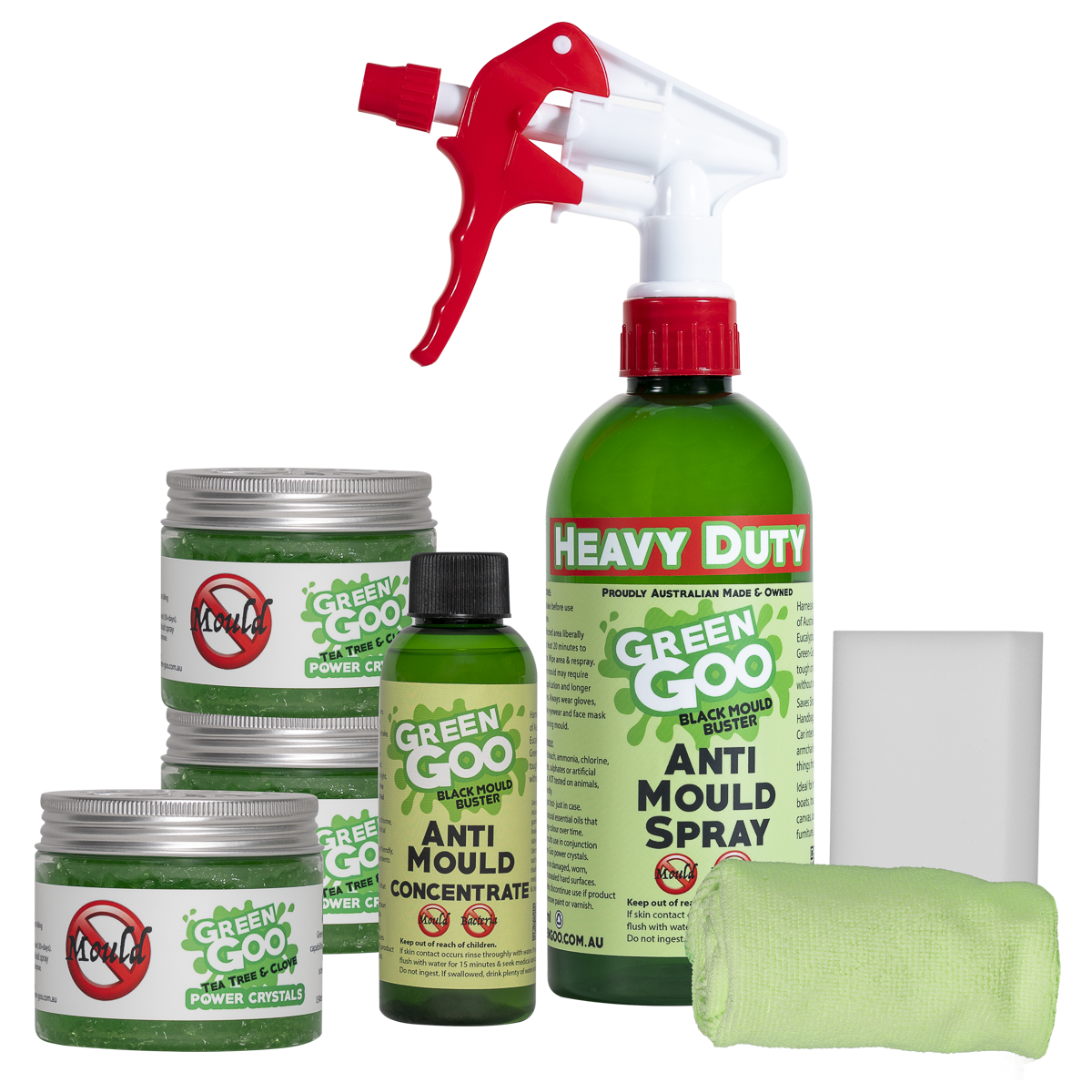

Heavy Duty Anti Mould Essentials
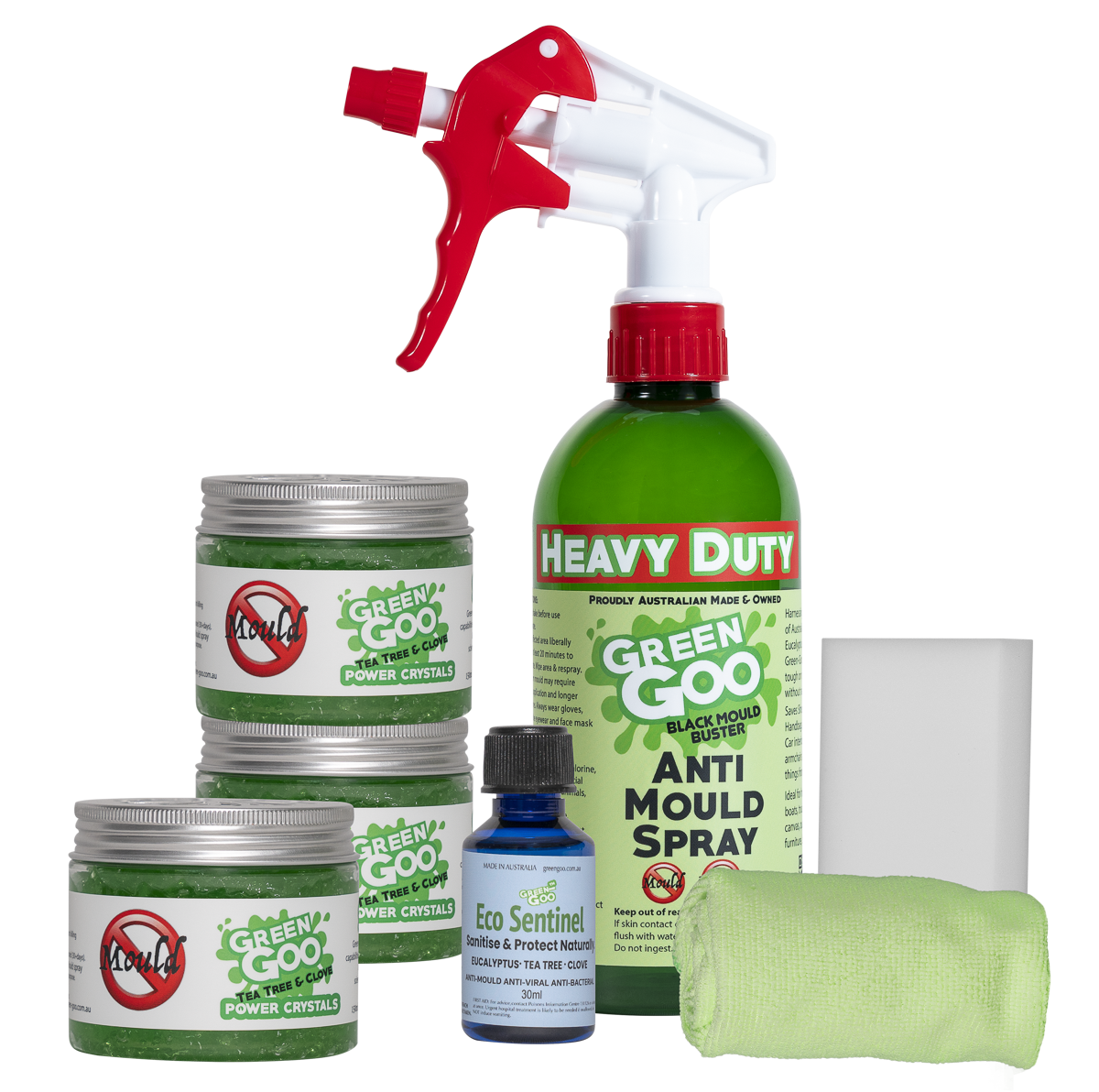
Heavy Duty Anti Mould SHED Essentials


HEAVY DUTY Anti Mould Sprayer 500ml

HEAVY DUTY Anti Mould Spray ECONOMY REFILL 500ml
Key Takeaways
-
Black mould penetrates deep into porous materials, unlike surface-level mildew.
-
Warning signs include musty odours, peeling paint, and mould that keeps returning despite cleaning.
-
Different surfaces- walls, tiles, and grout- need slightly different treatment methods.
-
Safety gear and good ventilation are essential when removing black mould.
-
Left untreated, black mould can pose serious health risks in sensitive individuals.
One of the most common and concerning household mould problems is black mould. Appearing in damp bathrooms, kitchens and poorly ventilated rooms, this fungus spreads quickly when left untreated.
The good news is that Green Goo's range of black mould killers removes existing growth and helps prevent it returning. Combine a powerful black mould cleaner with moisture control, and you'll create a cleaner, healthier and more comfortable home. For milder, everyday mould, our broader mould killers range may be all you need.
Black mould is one of the more resilient household fungi, which is why it tends to keep coming back even after what looks like a thorough clean. Understanding what sets it apart from ordinary mildew is the first step towards actually solving the problem rather than just managing the symptoms.
What Is Black Mould and Why It's Treated Differently from General Mildew
People commonly mistake black mould for mildew, but the two aren't the same. Mildew is a surface-level fungus that appears as a thin white or grey coating and is relatively easy to remove.
Black mould penetrates deeply into porous materials, often developing where persistent moisture problems exist. It can spread behind walls, ceilings and under flooring, making prompt black mould removal essential before it becomes a bigger structural issue.
In plain terms: it's a family of dark-coloured fungal species that thrive in persistently damp, poorly ventilated spots, and they don't stay put on the surface. Plasterboard, timber and grout are all fair game once conditions are right.
|
Feature |
Mildew |
Black Mould |
|---|---|---|
|
Appearance |
Thin white or grey coating |
Dark green, black or brown patches |
|
Depth |
Surface level |
Penetrates porous materials |
|
Ease of removal |
Relatively easy |
Requires targeted treatment |
|
Risk if ignored |
Cosmetic issue |
Can spread behind walls and ceilings |
Signs You Have a Black Mould Problem, Not Just Cosmetic Staining
If you've noticed small, dark spots becoming large patches, chances are you're dealing with black mould rather than simple staining. Common warning signs include:
-
Black, dark green or brown patches on walls or ceilings.
-
Musty or earthy odours.
-
Peeling paint or bubbling wallpaper.
-
Persistent condensation on windows.
-
Damp patches that never seem to dry.
-
Recurring mould despite repeated cleaning.
If you're wiping the mould away yet it keeps reappearing, you likely have an underlying moisture issue rather than simple surface staining.
It helps to check a few specific spots regularly: behind furniture pushed against external walls, under sinks, along window frames and inside exhaust fan covers. These areas often develop early signs of black mould well before it becomes visible on open wall space.
Best Black Mould Killers and Cleaning Methods for Walls, Tiles and Grout
Green Goo's black mould killers are formulated to destroy mould spores across different household surfaces:
-
Walls: treat with the Heavy Duty Anti Mould Spray. Spray on, wait 20 minutes, wipe away, and repeat if needed.
-
Tiles: the Bathroom Buster spray works well here. Apply, wait 20 minutes, wipe away, and repeat.
-
Grout: spray with Bathroom Buster to kill the visible mould. If the stain lingers, mix a little Bathroom Buster with baking powder into a paste and work it into the lines with a grout mould remover brush. Once clean and dry, place a Power Crystals gel nearby, since grout is one of the most common spots for mould to return.
Step-by-Step: Eliminating Black Mould Safely
Safety should always be a priority when cleaning black mould:
-
Wear gloves, eye protection, and a suitable face mask.
-
Open windows to improve ventilation.
-
Apply the mould killer evenly across the affected area.
-
Let the product sit for the recommended time.
-
Gently scrub, if required, using a soft brush.
-
Wipe or rinse according to the product instructions.
-
Dry the area thoroughly to discourage future growth.
Preventing Black Mould From Returning After Treatment
Keeping black mould at bay comes down to consistent moisture control:
-
Improve ventilation with extractor fans, dehumidifiers or open windows.
-
Repair leaking pipes and roofs promptly.
-
Wipe away condensation before it soaks into surfaces.
-
Regularly inspect bathrooms, laundries and kitchens to catch small problems early.
-
Avoid overfilling wardrobes and cupboards, since blocked airflow lets condensation settle undisturbed.
Fabric surfaces need a different approach again. If mould has reached curtains, canvas or upholstery, our fabric mould removers guide explains how to treat soft furnishings without causing damage.
What Makes Bathrooms and Laundries Such Common Hotspots
Black mould disproportionately shows up in bathrooms and laundries for a simple reason: these rooms combine heat, moisture and limited airflow more consistently than anywhere else in the house. A hot shower can push humidity well above the level mould needs to establish itself, and if that moisture isn't cleared quickly through ventilation, it settles on the coolest nearby surfaces, often grout, silicone and ceiling corners.
Laundries face a similar issue from front-loading washing machines, where residual moisture around the door seal and detergent drawer creates an ongoing, low-level source of dampness that's easy to overlook.
Why Repeated Cleaning Sometimes Isn't Enough
If you've treated the same patch of black mould more than once and it keeps returning, the cleaning method usually isn't the issue, the moisture source is. Common culprits include a slow plumbing leak behind a wall, inadequate bathroom ventilation, or condensation forming inside an exterior wall cavity.
In these cases, no mould killer, however effective, can offer a permanent fix on its own. Treating the visible mould controls the immediate problem, while a plumber, builder or ventilation upgrade addresses the root cause. Combining both is the only way to break the cycle for good.
Frequently Asked Questions
Is Black Mould Dangerous?
Yes, black mould is extremely dangerous and, left untreated, can become life-threatening. It's linked to a serious condition known as CIRS (Chronic Inflammatory Response Syndrome) in sensitive individuals. Read more in our own guide to the dangers of mould, and the Better Health Channel has more detail on the health effects of mould exposure and why prompt removal matters.
When Should I Call a Professional?
Call in the professionals if the affected area keeps returning despite treatment, or has spread into wall cavities, ceilings or insulation. Experts have specialised equipment to safely eliminate black mould and prevent future outbreaks.
Can I Use a Natural Product on Black Mould?
Yes, for most household-level outbreaks. Our natural mould killers use tea tree, clove and eucalyptus oil to target spores directly, though severe or widespread infestations may need a heavy-duty formula or professional help.
Why Does Black Mould Keep Coming Back in the Same Spot?
Repeated regrowth in the same location almost always points to an ongoing moisture source rather than a cleaning failure. Check for slow leaks, condensation build-up or poor airflow around that specific spot before assuming the product itself isn't working.