
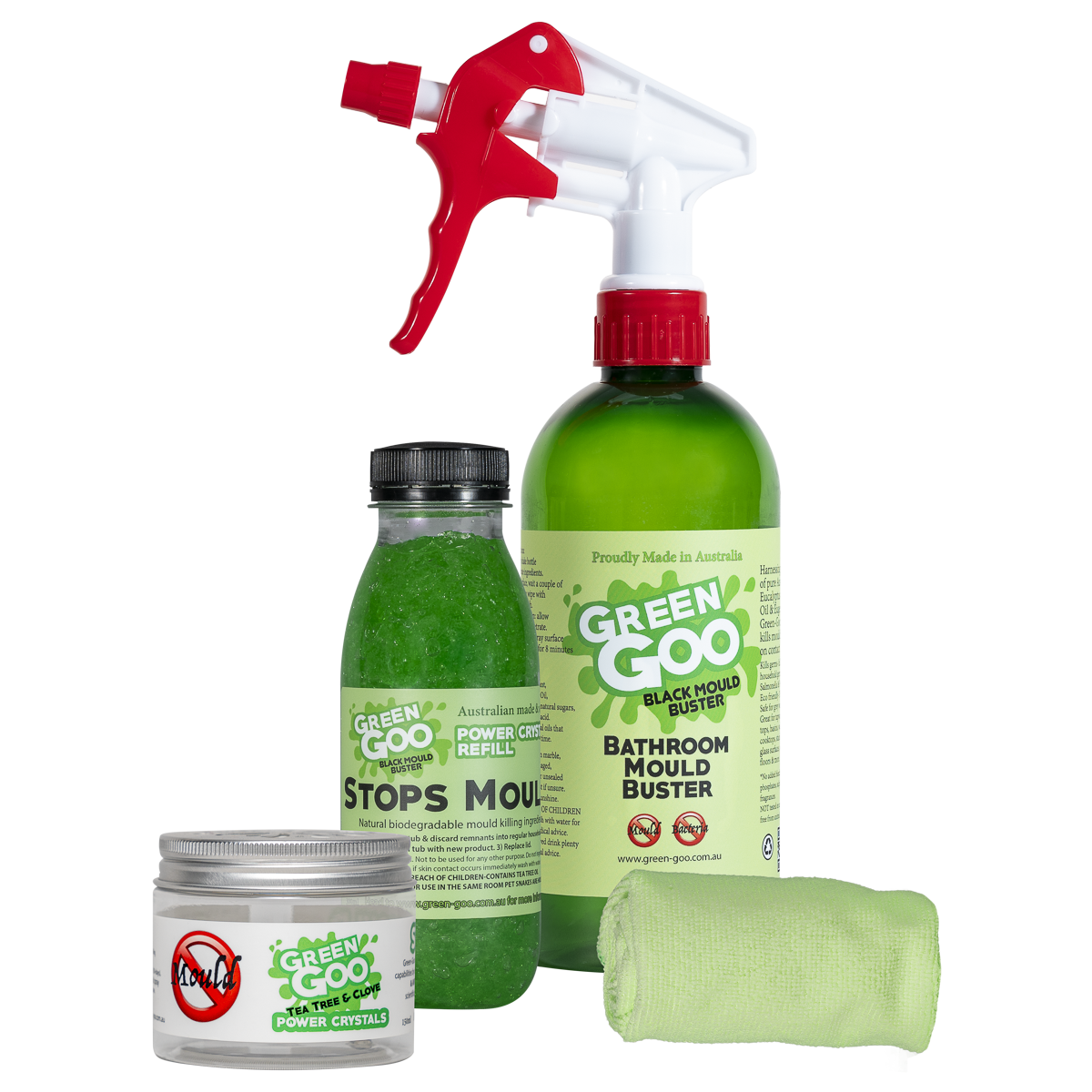
Bathroom Busting Essentials.
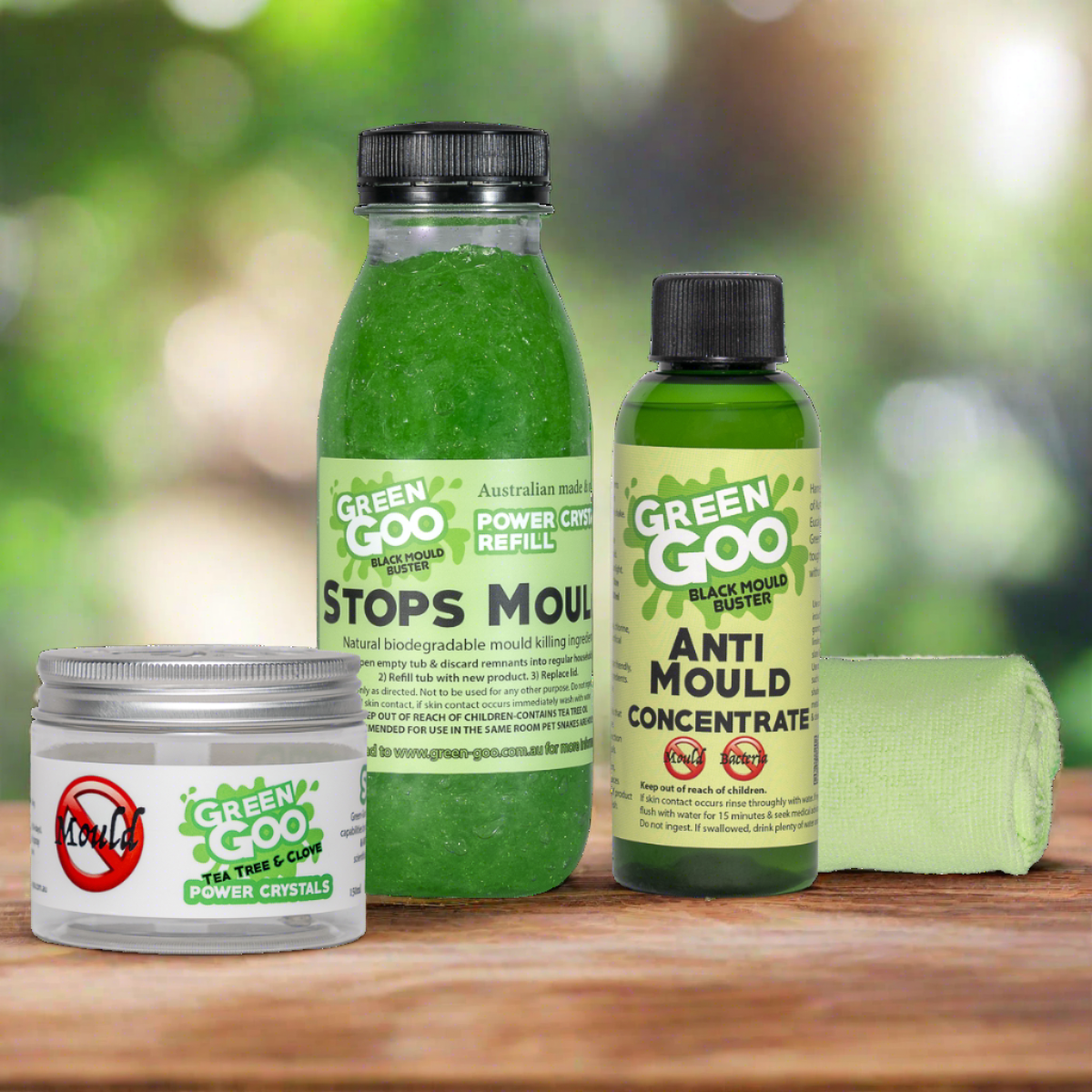
Anti Mould Essentials Pack - Concentrate


Anti Mould Spray Concentrate 125ml
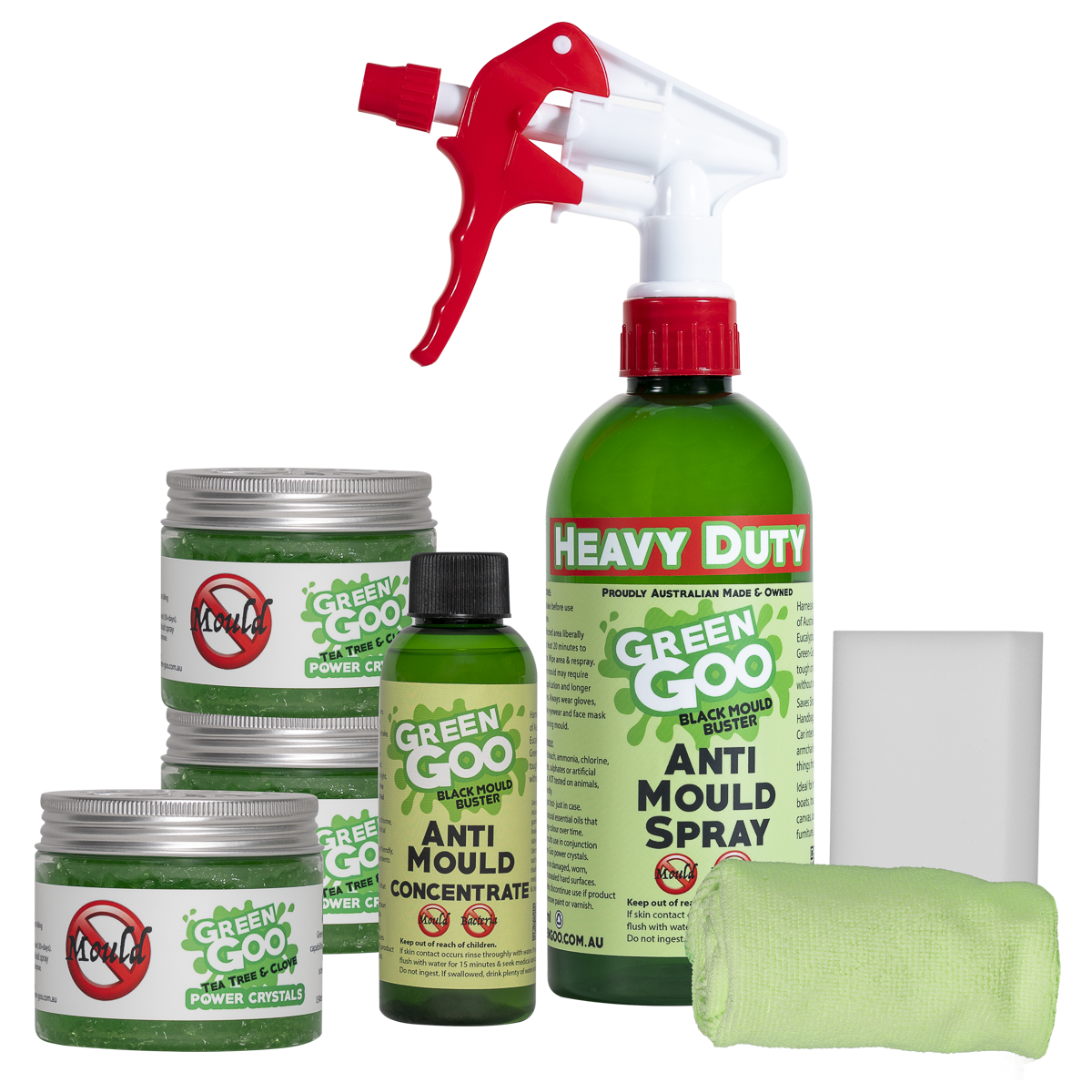

Heavy Duty Anti Mould Essentials

HEAVY DUTY Anti Mould Spray ECONOMY REFILL 500ml


HEAVY DUTY Anti Mould Sprayer 500ml
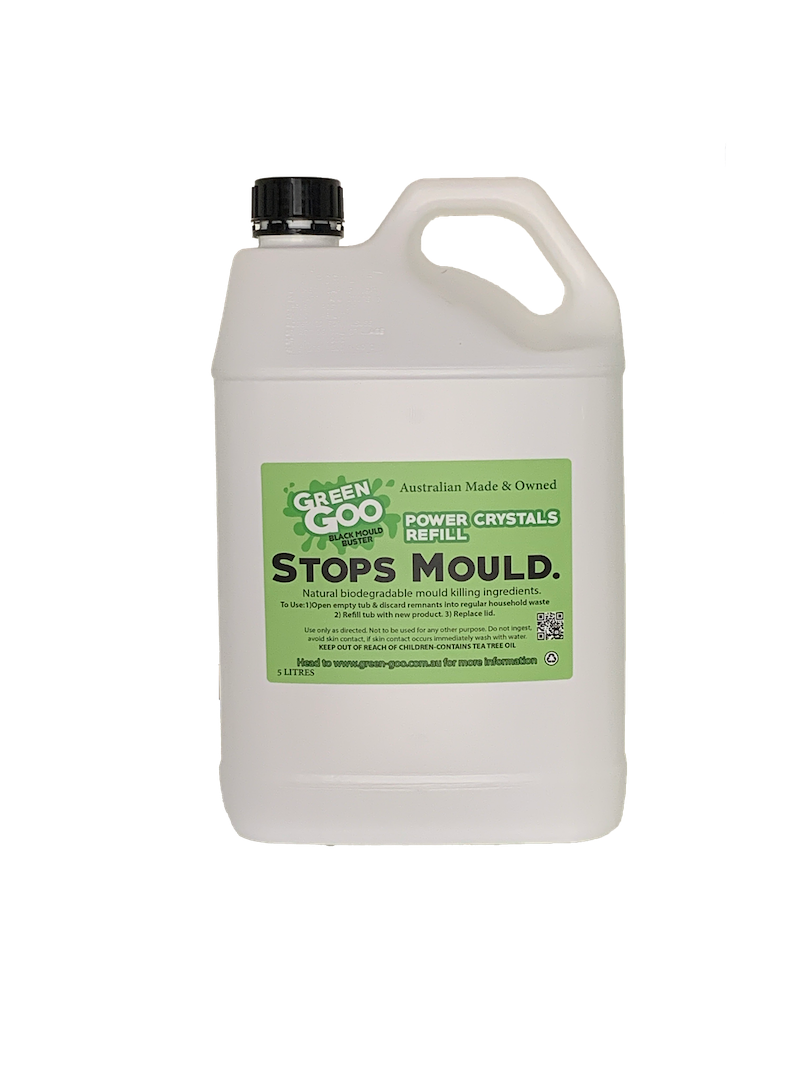
Mould Killer Power Crystals 5Lt Refill
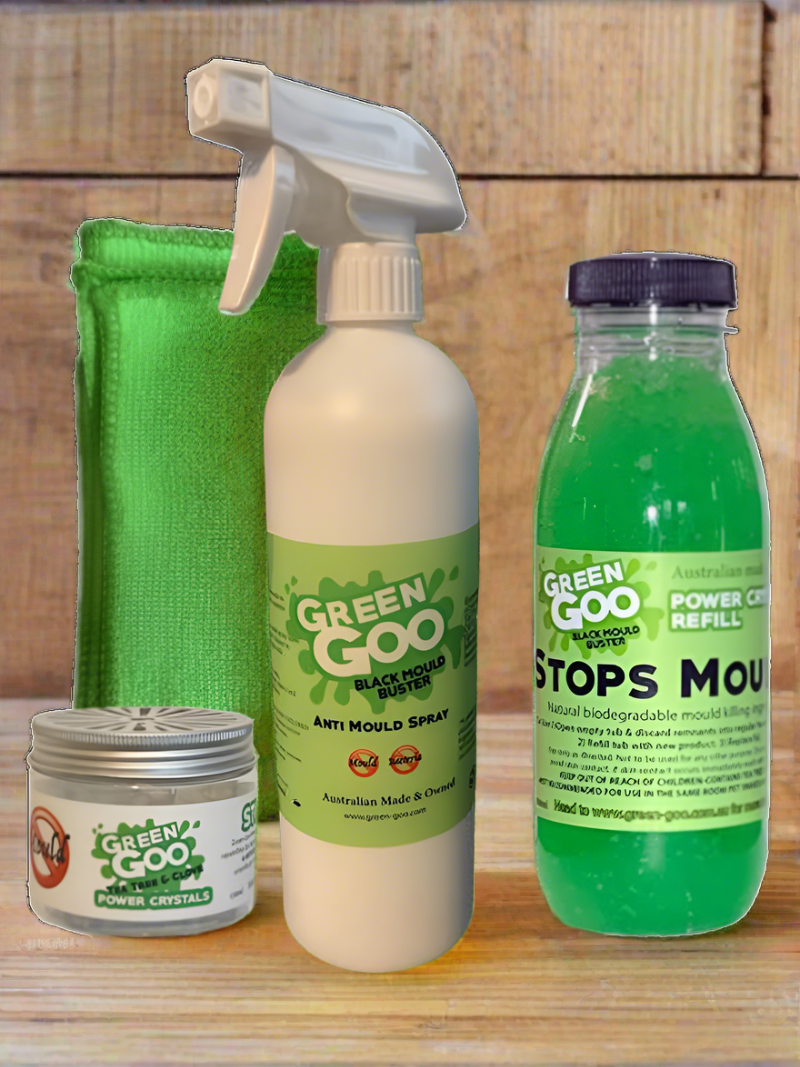
Anti Mould Essentials Pack - Spray Trigger
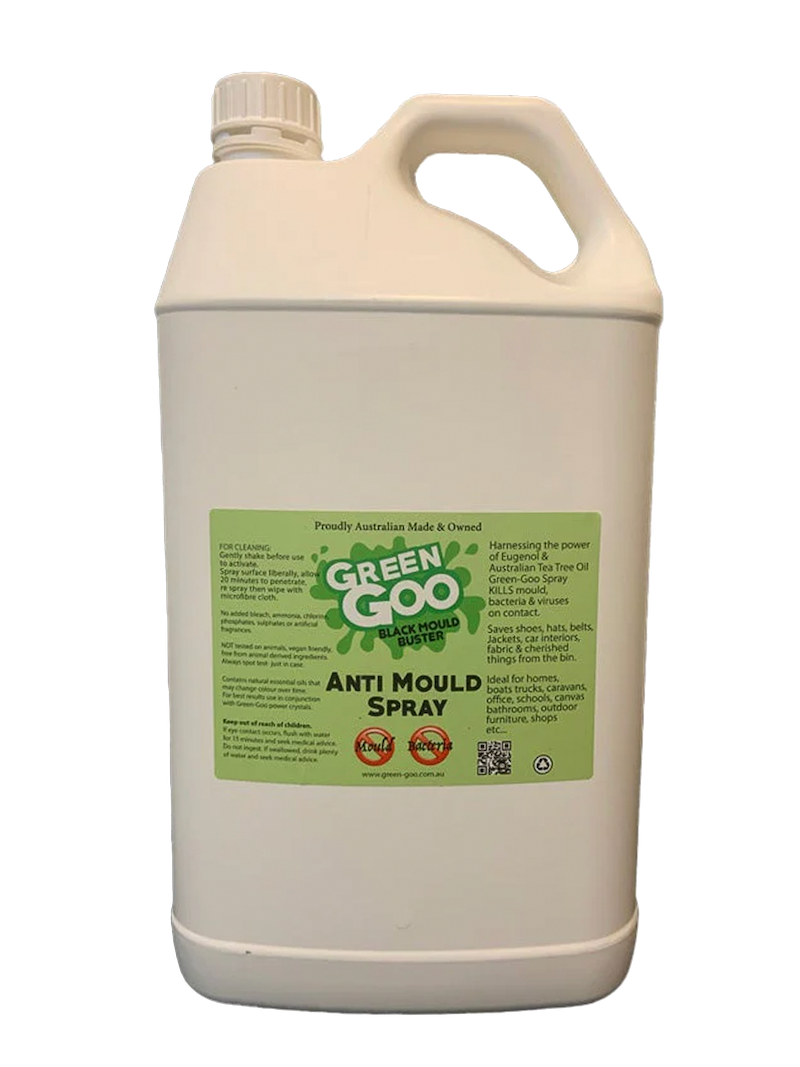
Anti Mould Spray - 5lt Bulk
Key Takeaways
-
A true mould killer destroys mould spores below the surface, while bleach only whitens the visible stain.
-
Hard, non-porous surfaces such as tiles and glass respond well to ready-to-use mould sprays.
-
Soft surfaces like canvas, carpet and curtains need gentler, fabric-safe mould cleaning products.
-
The right mould killer depends on the surface type, how porous it is, and how severe the outbreak has become.
-
Fixing the moisture source is just as important as the product you use, otherwise mould will return.
Mould is a problem that affects many Australian homes, making them feel unclean and uninviting. With Green Goo's natural mould killer range, you can restore clean, healthy surfaces and stop spores from spreading further. Whether you're tackling a few spots in the bathroom or dealing with mould inside the car, the right mould cleaning products make all the difference to lasting results.
This guide walks through what actually kills mould versus what just hides it, which products suit which surfaces, and how to choose confidently based on your specific problem.
Mould thrives wherever moisture, warmth and an organic food source come together, so it isn't always a sign of a dirty home. Bathrooms, laundries, wardrobes and window sills are common trouble spots simply because they hold onto humidity longer than the rest of the house. Understanding this helps explain why the same patch can keep reappearing even after a thorough clean, and why the cleaning product itself is only half of the solution.
What Actually Kills Mould vs. What Just Bleaches the Stain
A common misconception is that if a stain disappears, the mould is gone. Unfortunately, this isn't always true. Many households reach for chlorine bleach, which simply whitens the surface without destroying the mould growing beneath porous materials.
A true mould killer contains active ingredients designed to penetrate the surface and eliminate mould spores at the source, not just discolour them. Some products lean on hydrogen peroxide to do that; Green Goo does it with tea tree and clove oil instead, working on the mould you can't see, not just the bit you can.
That's really the whole game with a genuine mould killer: it destroys the spores and the fungal structure underneath, rather than lifting discolouration off the surface. A stain-free patch can still be hiding a living colony, ready to resurface the moment conditions turn favourable again.
|
Approach |
What It Does |
Long-Term Result |
|---|---|---|
|
Chlorine bleach |
Whitens the visible stain |
Mould often returns, sometimes worse |
|
True mould killer |
Penetrates the surface and kills spores |
Growth is stopped at the source |
Best Mould Killers for Walls, Ceilings and Hard Surfaces
Walls, ceilings, tiles, concrete, glass and bathroom fixtures are relatively easy to treat. Their hard, non-porous surface allows a mould killer for walls to stay in contact with the affected area long enough to destroy spores effectively.
Popular options for hard surfaces include:
-
Ready-to-use mould removal sprays for everyday maintenance.
-
Concentrated fungicidal solutions for larger or more established areas.
These mould remover for walls formulas leave a protective barrier behind, slowing future mould growth. That makes them ideal for bathrooms, laundries and kitchens, where humidity is a constant challenge.
Hard surfaces are generally the easiest category to treat because the mould sits on top of the material rather than growing into it. A single application, left for the recommended dwell time, is often enough to deal with everyday spotting on tiles or window frames. Larger or long-standing patches, particularly on unpainted concrete or grout, may need a second pass or a stronger, concentrated formula to fully clear.
Mould Killers for Soft Surfaces: Canvas, Carpet, Curtains and Washing Machines
If upholstery or other soft materials have been affected by mould, they need a gentler approach to prevent damage and discolouration. Suitable treatments include:
-
Fabric-safe mould removers for everyday soft furnishings.
-
Laundry sanitisers for washable fabrics.
-
Upholstery-safe mould sprays for lounges and car interiors.
-
A specialised canvas mould cleaner for outdoor furniture, tents and awnings.
Washing machines are also prone to developing mould, particularly around door seals, detergent drawers and internal components. A washing machine mould cleaner helps eliminate hidden mould and removes the musty odours that come with it.
Carpets and valuable fabrics can benefit from a dedicated carpet mould remover or curtain mould remover, but if the growth is extensive, a professional clean may be the more effective solution.
Soft surfaces need more caution because over-saturating fabric can push moisture deeper into the fibres, encouraging mould rather than removing it. A light, even application, adequate drying time and good airflow afterwards all help the treatment work properly without leaving fabric damp for longer than necessary.
How to Choose a Mould Killer Based on Surface Type and Severity
The right mould killer depends on both the material involved and the extent of the infestation. Small spots in the bathroom usually respond well to a ready-to-use spray. If the outbreak was caused by a leak or flooding, you may need a stronger treatment plus a fix for the underlying moisture source.
When selecting a product, consider:
-
Whether the surface is porous or non-porous.
-
Whether it's for indoor or outdoor use.
-
The required contact or dwell time.
-
Whether ongoing preventative protection is included, such as a mould remover gel for the surrounding air.
If you treat the mould without fixing the underlying problem, it will simply come back. Common root causes worth checking include leaking pipes, poor bathroom ventilation, condensation on single-glazed windows and overcrowded wardrobes that block airflow.
Step-by-Step: How to Apply and How Long to Leave It On
Green Goo's Anti Mould and Heavy-Duty Anti Mould sprays follow a straightforward process:
-
Spray the product evenly across the affected area.
-
Allow it to sit for 20 minutes so the active ingredients can work.
-
Wipe off the residue with a clean cloth.
-
Respray for a second application if needed.
-
Allow the surface to dry completely.
For grout lines and silicone seals that a cloth can't properly reach, pairing your spray with a purpose-built grout mould remover brush makes a noticeable difference to the finished result. If the outbreak is caused by black mould specifically, our guide to black mould killers covers the extra precautions worth taking.
Reading a Product Label Before You Buy
Not every mould cleaning product on the shelf is created equal, and the label usually gives the game away. Look for an actual active ingredient named on the bottle, a fungicidal compound, hydrogen peroxide, or a natural essential oil blend, plus a specific dwell time and any surface restrictions. If a product just promises to "remove" mould without telling you how or for how long, that's not transparency, that's marketing. Ours says spray, wait 20 minutes, wipe, because that's genuinely what happens.
It's also worth checking whether the label distinguishes between indoor and outdoor use, since outdoor mould killers are often formulated to withstand UV exposure and weathering that indoor products don't need to handle.
Frequently Asked Questions
Is It Safe Around Kids and Pets?
Yes. Unlike many mould killers that rely on strong chemicals, Green Goo's products are naturally derived, making them pet and child friendly when used as directed.
How Long Until Mould Returns?
If the underlying moisture problem has been addressed, you shouldn't have to worry about mould reappearing. Pairing your anti mould spray with a Power Crystals gel helps keep the surrounding air protected between cleans.
Can I Use the Same Mould Killer on Every Surface?
Not always. Hard, non-porous surfaces like tiles and glass can handle stronger, ready-to-use sprays, while fabrics, carpets and upholstery need a gentler, fabric-safe formula to avoid damage or discolouration.