


Blu Goo 5Lt Refill
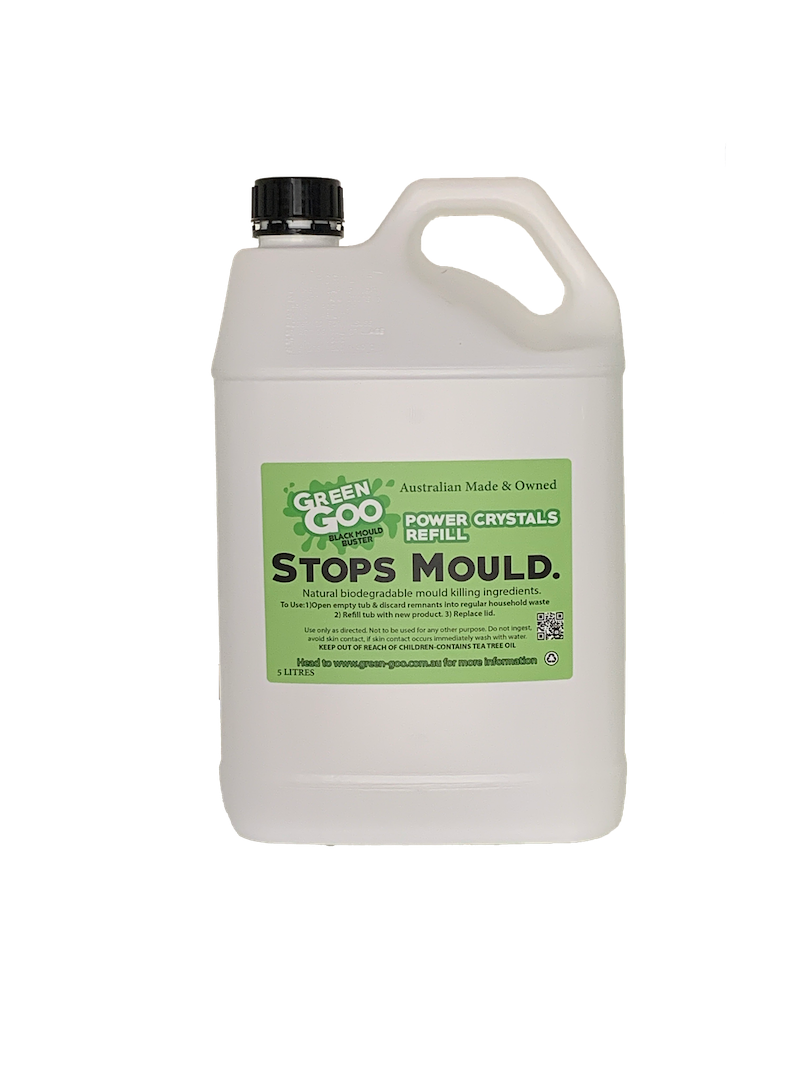
Mould Killer Power Crystals 5Lt Refill


Blu Goo 2LT

Mould Killer Power Crystals 2Lt Refill

Green Goo Mould Killer Power Crystals 1Lt Refill

Blu Goo Mould Killer 300ml

Mould Killer Power Crystals 300ml


Mould Killer Power Crystals 150ml
Key Takeaways
-
A mould remover gel releases mould-killing vapour into the air rather than being applied to a surface.
-
One tub can protect a room of around 20 m³ for 30 to 90 days.
-
Gels are best used after a spray to stop mould settling back in after cleaning.
-
Bathrooms, wardrobes and laundries benefit most from ongoing gel protection.
-
Sprays and gels work best as a combined routine, not as a substitute for one another.
If you've cleaned mould away only to watch it creep back a few weeks later, a mould remover gel might be the missing piece. Unlike a spray, which treats mould you can already see, Green Goo's Power Crystals mould gel works differently. It's a slow-release gel that fills the surrounding air with mould-killing vapour, protecting the space long after a spray has been wiped away.
Most households only think about mould once it's visible, but airborne spores are constantly settling on surfaces in humid rooms, long before a new patch appears. A gel addresses that gap between cleans, rather than waiting for the next outbreak to show up.
What Is a Mould Gel and How Does It Differ From a Spray?
A mould remover gel isn't applied directly to a stain the way a spray is. Instead, the gel sits in an open tub placed in a room's natural airflow, gradually releasing a vapour of tea tree and clove oil into the air.
Sprays are built for fast, targeted removal of visible mould, wiped away once the dwell time is up. Gels are built for what happens after: ongoing protection against mould finding its way back into the room.
Think of it less as a cleaning product and more as a slow, steady bodyguard for the air in that room.
Why Gels Keep Working After a Spray Is Wiped Away
Here's the problem most mould cleaners don't tell you about: many products don't actually kill mould; they just bleach it invisible. Like a suntan fading, that "clean" patch can reappear as the mould underneath keeps growing, and by the time it's visible again, it's often worse than before.
A spray's job finishes once you wipe the surface clean; its protective effect is largely over at that point. A mould gel, on the other hand, keeps working. Because the vapour disperses continuously, one tub placed at head height near a fan or air conditioner can treat an entire room, around 20 m³, for 30 to 90 days. This makes gels especially useful in enclosed, humid spaces like bathroom cabinets, wardrobes and laundries, where moisture builds up quietly between cleans.
Best Uses for Mould Gel: Bathrooms, Wardrobes and High-Humidity Rooms
Mould removal gels are ideal for spaces where moisture regularly builds up in the air, not just on one surface:
-
Bathrooms, especially near grout lines, sealant, and shower recesses.
-
Wardrobes and linen cupboards.
-
Laundries and other poorly ventilated rooms.
-
Any room where mould keeps returning after cleaning.
Rather than treating one patch, the gel protects the whole space. For bathrooms specifically, see our guide to bathroom mould cleaners for a full routine that pairs sprays and gels together.
Room size and airflow both affect how far a single tub goes. A small ensuite with good extraction may only need one tub for the full 90-day cycle, while a larger, more enclosed laundry might need replacing closer to the 30-day mark. Placing the gel near, rather than directly in front of, a fan or vent tends to give the most even coverage.
How to Use Mould Remover Gel Correctly
Using a mould gel is straightforward:
-
Remove the ventilated lid, peel back the foil seal, and replace the lid.
-
Place the tub at around head height, roughly 7ft, somewhere with gentle airflow, such as near a fan or on top of an air conditioner.
-
Leave it in place. One tub lasts 30 to 90 days depending on room size.
-
Once the gel is fully spent, wipe out the tub and top it up with a refill.
There's no scrubbing, wiping, or rinsing involved; the gel does its work passively in the air.
Mould Gel vs. Mould Spray: Which to Use When
Both formats matter, and most households get the best results using them together.
|
Situation |
Best Option |
|---|---|
|
Mould is already visible on a surface |
Mould spray |
|
You need a fast, targeted clean |
Mould spray |
|
You've just finished spraying and want to stop mould coming back |
Mould remover gel |
|
A room, like a bathroom or wardrobe, keeps developing mould despite regular cleaning |
Mould remover gel |
For active outbreaks that need a spray first, our mould killers range covers everyday and heavy-duty options depending on severity. For grout specifically, pairing a spray with a grout mould remover brush before placing a gel nearby gives the most thorough result.
What's Actually in the Vapour
Green Goo's gel formula is built around tea tree and clove oil, the same naturally antifungal ingredients used across our spray range. As the gel gradually evaporates, it releases these active compounds into the surrounding air in a low, steady concentration, enough to discourage airborne spores from settling and establishing on nearby surfaces, without needing constant reapplication.
This slow-release approach is part of what makes gels so well suited to enclosed spaces. A spray delivers a strong, immediate dose to a specific spot, while a gel maintains a much lower, continuous presence across the whole room.
Signs a Room Needs a Gel, Not Just Another Spray
Some rooms simply run humid no matter how often they're cleaned. A few signals suggest a gel would help more than repeating the same spray routine:
-
Mould reappears in the same spot within a few weeks of cleaning.
-
The room has limited airflow, such as an internal bathroom with no window.
-
Condensation regularly forms on windows, mirrors or tiled surfaces.
-
Wardrobes or cupboards in the room feel noticeably musty even when nothing is visibly stained.
In these situations, a gel doesn't replace the spray; it adds a layer of protection the spray was never designed to provide on its own.
Frequently Asked Questions
How Long Does a Gel Tub Last?
A single tub covers roughly 20m³ and lasts a minimum of 30 days, up to 90 days, depending on room size and airflow.
Do I Apply the Gel Directly to Mould?
No. Unlike a spray, the gel isn't applied to surfaces. It works by releasing vapour into the air from its tub, so simply place it in the room rather than on the mould itself.
Can I Use a Gel Instead of a Spray?
Not for visible mould. A gel is a maintenance and prevention tool, not a substitute for treating an active outbreak. Spray first to remove what you can see, then use the gel to help stop it coming back.
Can I Use More Than One Gel Tub in the Same Room?
Yes, for larger or more open-plan spaces. Since one tub is designed to cover roughly 20m³, bigger rooms or areas with strong airflow may need two tubs placed at different points to maintain even coverage throughout.