

Bathroom Buster - 5Lt Bulk

Bathroom Buster 2LT REFILL
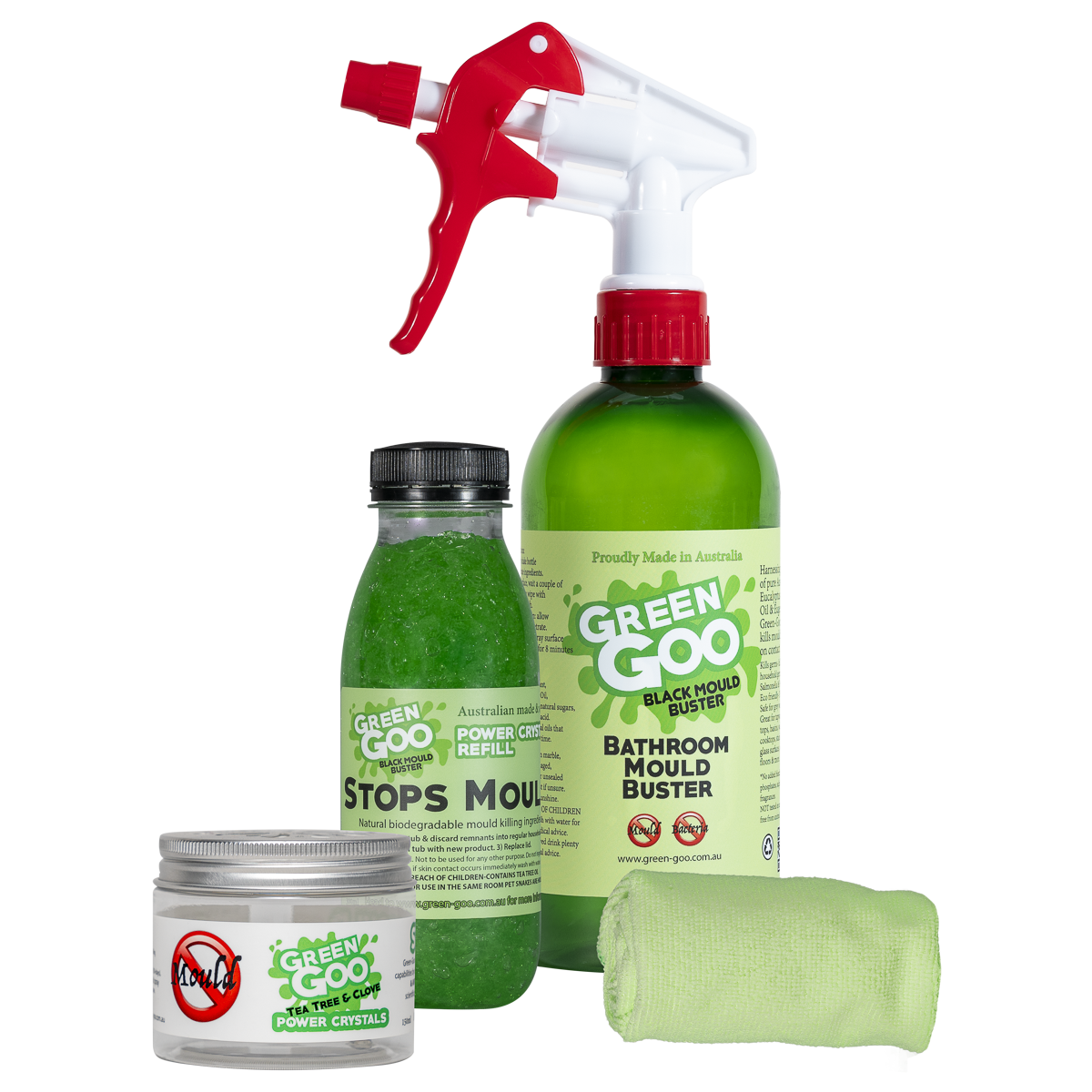
Bathroom Busting Essentials.


Bathroom Buster 1 Litre Sprayer

Green Goo Bathroom Buster 1LT REFILL


Bathroom Buster 500ml

Bathroom Buster 500ml REFILL
Key Takeaways
-
Bathrooms combine heat, moisture, and limited airflow, making them the most common mould hotspot in Australian homes.
-
Different bathroom surfaces- showers, tiles, grout, and silicone- each need a slightly different treatment approach.
-
A step-by-step routine of ventilate, treat, scrub, dry gives the most reliable results.
-
A dedicated bathroom mould killer clings better to vertical surfaces than a general-purpose cleaner.
-
Preventing regrowth relies on ongoing moisture control, not just occasional deep cleans.
While bathrooms are designed to handle water, constant moisture, steam, and warmth make them the perfect breeding ground for mould. Green Goo's bathroom mould cleaner range makes it easier than ever to tackle stubborn mould and keep it from returning.
Combined with a simple maintenance routine, our products give you a clean, healthy bathroom that looks as good as it feels. If you're dealing with a more general mould issue elsewhere in the home, our full mould killers range covers walls, ceilings and other hard surfaces too.
Because bathrooms are used daily and cleaned relatively often, mould here can feel especially frustrating. It's rarely a sign of neglect; more often, it's a sign that the room's ventilation simply isn't keeping pace with how much moisture a household produces each week.
Why Bathrooms Are the Number One Mould Hotspot in Australian Homes
Bathrooms combine high humidity with daily exposure to water, giving mould spores the perfect opportunity to settle on walls, ceilings, grout, silicone seals and even bathroom accessories. Poor ventilation compounds the problem: shower steam that isn't cleared quickly lingers on surfaces, letting mould establish itself in hidden corners and porous materials.
Soap residue, body oils and dust add an extra food source. Together, these make bathrooms one of the most common places for recurring mould in Australian homes, particularly in properties without windows or with underpowered exhaust fans.
Older homes and apartments are especially prone to this, since many were built before bathroom ventilation standards accounted for the amount of steam a modern power shower produces. If your fan struggles to clear steam within a few minutes of a shower ending, that's usually a sign the room needs extra help beyond cleaning products alone.
Best Mould Cleaners for Showers, Tiles, Grout and Silicone
Different bathroom surfaces call for the right combination of products:
|
Surface |
Recommended Treatment |
|---|---|
|
Showers and walls |
Anti Mould Spray for regular maintenance |
|
Ceramic tiles |
Same anti-mould spray: spray, wait, wipe |
|
Grout |
Bathroom Buster, plus a baking powder paste and grout brush for lingering stains |
|
Silicone seals |
Spray directly onto the seal and wipe clean once the mould lifts |
After treating any of the above, place a Power Crystals gel in the bathroom. It's one of the simplest ways to help stop regrowth in this naturally humid room, and pairs well with the products in our mould remover gel range.
Step-by-Step Bathroom Mould Clean-Up Routine
-
Open windows or switch on the extractor fan before cleaning.
-
Wear gloves and the correct PPE throughout.
-
Apply the bathroom mould remover generously to affected surfaces.
-
Let it sit for the recommended time so it can break down mould spores.
-
Scrub grout lines, silicone, and textured surfaces with an appropriate brush.
-
Wipe or rinse according to the directions.
-
Dry the area thoroughly with a clean cloth.
-
Allow good airflow to remove remaining moisture.
For grout specifically, our grout mould remover brush is purpose-built to reach the narrow lines a cloth simply can't get into.
Bathroom Mould Killer vs. General-Purpose Mould Remover: When Specificity Matters
General-purpose mould removers work on most household surfaces, but bathrooms benefit from a product built for the job. Bathroom mould killers tackle soap scum and persistent moisture while helping prevent mould from returning, and cling well to vertical surfaces like shower walls and silicone seals rather than running straight off.
This matters more than it might seem. A thin cleaner that drips away before its dwell time is up simply won't have enough contact with the mould to work properly, no matter how effective the formula is on paper.
Vertical surfaces are the real test of a bathroom-specific formula. Shower walls, tiled splashbacks and silicone seals all run the risk of a thin spray sliding straight to the floor before it's had a chance to work, which is why cling and dwell time matter just as much as the active ingredient itself.
Preventing Mould Regrowth in Bathrooms
You may have the best mould cleaner, but if you also have excess moisture, mould will continue to appear. Prevent regrowth by:
-
Running the exhaust fan during showers and for at least 20 minutes afterwards.
-
Opening windows whenever possible.
-
Using a squeegee to remove water from shower screens and tiles.
-
Repairing leaking taps, pipes or shower seals.
-
Drying surfaces completely.
-
Placing a Green Goo Power Crystals gel in the bathroom is one of the simplest ways to keep this high-moisture room protected between cleans.
According to the Victorian Government's Better Health Channel, controlling indoor moisture is the single most effective way to prevent mould from establishing itself in the home, which is exactly why bathroom ventilation habits matter as much as the cleaning product itself.
Building a Routine That Actually Sticks
The households that keep bathroom mould away long-term tend to treat prevention as a five-minute habit rather than an occasional deep clean. A quick squeegee after each shower, a fan left running a little longer than feels necessary, and a gel tub replaced on schedule do more collectively than an aggressive scrub every few months.
If mould has spread beyond the bathroom into fabric shower curtains or bath mats, our guide to fabric mould removers covers how to treat soft furnishings safely.
What to Do If Mould Returns Despite a Good Routine
Occasionally a bathroom does everything right, fan running, windows opened, regular sprays, and mould still finds a way back. In these cases, it's worth checking for a hidden source rather than assuming the cleaning routine has failed.
Common hidden culprits include a slow leak behind a shower wall, a poorly sealed bath edge, or an exhaust fan that's ducted incorrectly and simply recirculating moist air rather than expelling it outside. A plumber or building inspector can usually identify these issues quickly, and fixing them is often what finally breaks a recurring mould cycle for good.
Frequently Asked Questions
How Often Should I Treat Bathroom Mould?
Every few weeks should be sufficient alongside your regular weekly clean. In humid climates or poorly ventilated bathrooms, it may need to be more frequent.
Is Shower Mould Dangerous?
Shower mould can irritate the eyes, skin, and respiratory system. While small patches can be managed with a shower mould remover, widespread or recurring mould should be addressed quickly.
Why Does Mould Keep Coming Back in the Same Corner?
A single corner that repeatedly develops mould usually has the least airflow in the room, often behind a door, in a shower recess, or near a poorly sealed window. Targeting that specific spot with a gel, alongside your regular spray routine, tends to break the cycle.